Cast Iron Drain Leak Cleanup in Fort Myers and Cape Coral
Many Florida homes built before about 1975, and some built later, have cast iron drain lines that corrode and crack under the slab.
A leaking drain line leaks sewage, so the damage is Category 3: wet flooring, baseboards and drywall it touches usually have to come out.
A plumber finds and fixes the pipe with a camera inspection; restoration removes contaminated materials and dries the slab and walls.
Sewage or Sewer Smell in Your Fort Myers Home? Do This First
- Stop using water in the house. No flushing, showers, laundry or dishwasher until a plumber clears or checks the line. Every gallon can come back up.
- Keep people and pets out of any area where wastewater is on the floor or the smell is strong.
- Cut power at the breaker if wastewater reaches outlets or appliances.
- Don't mop or vacuum it with household tools.
- Photograph everything: the backup, wet floors, cracked tile and stained baseboards.
- Call a plumber for a camera inspection of the drain, and a cleanup crew for the house.
More steps: the first-hour water damage checklist.
Why cast iron pipes fail in Southwest Florida
Cast iron was the standard material for home drain and sewer lines for decades. Homes built before about 1975 were commonly plumbed with it, and some builders kept using it into the 1970s and 1980s before PVC took over.
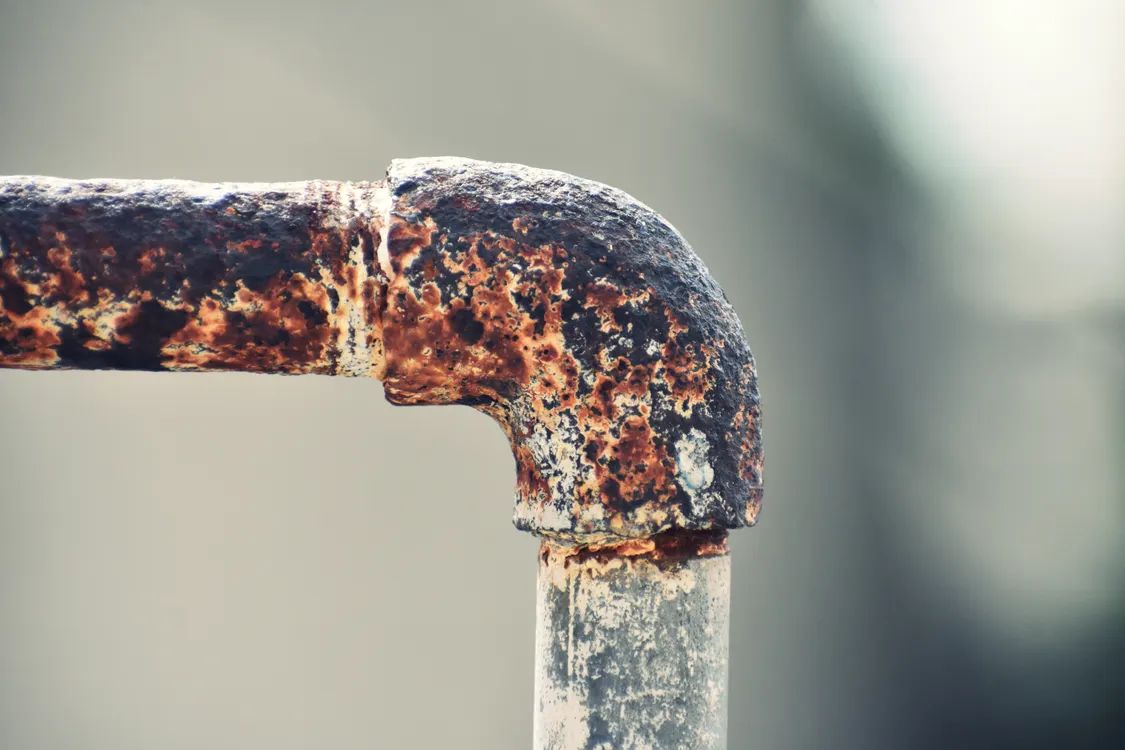
Cast iron corrodes from the inside as wastewater, gases and minerals eat at the pipe wall. Florida's salt-rich soil and high humidity are widely blamed for speeding up corrosion on the outside too. Over time the bottom of the pipe thins, cracks or rots through, and drain water leaks into the soil under the slab or into the wall cavity.
In Cape Coral, many homes built in the 1970s and 1980s, particularly in ZIP codes 33904, 33909 and 33914, still have original cast iron sewer lines. Older Fort Myers neighborhoods have many homes from the same era, so the same check applies there.
Cape Coral's ongoing utility expansion is also connecting older homes from septic to city sewer, and those connections can expose drain-line problems that went unnoticed for years.
Signs of cast iron pipe failure
- Slow drains in more than one fixture, especially showers and tubs on the lowest level
- Repeated clogs that come back soon after a plumber clears them
- Sewer smell in a bathroom or near a floor drain, often worse after heavy rain
- Sewage or gray water backing up into a tub, shower or floor drain
- Cracked, loose or hollow-sounding tile, especially in bathrooms
- Damp or stained baseboards and swollen door frames near bathrooms
- Water stains on flooring with no visible leak above
- Mold or a musty smell low on walls next to bathrooms or the kitchen
- Insects or pests around drains, which can mean an opening in the line
- Dark, rust-colored flakes in what the plumber clears from the line
If your home was built before about 1975 and you notice two or more of these, have the line checked.
How do I know if my house has cast iron pipes?
Check the year built on the Lee County Property Appraiser record or your closing documents.
Look at exposed drain pipes under sinks, in the garage or at a cleanout. Cast iron is heavy, dark gray or black and a magnet sticks to it. PVC is white or cream plastic.
Ask for a camera inspection. A plumber feeds a camera down the cleanout and records the inside of the line. It shows cracks, scale, sagging sections and where the leak is.
What leaking cast iron does to your home
A cracked drain under the slab leaks wastewater, not clean water. That makes it Category 3 water, the most contaminated type.
| Material | What usually happens |
|---|---|
| Tile and grout | Tile may stay; wet grout and slab are cleaned, disinfected and dried. Cracked or loose tile is replaced |
| Luxury vinyl plank and laminate | Removed; it traps contaminated water on the slab |
| Carpet and pad | Removed |
| Baseboards and lower drywall | Removed above the wet line, often with a flood cut about 2 feet up |
| Bathroom vanities and kitchen base cabinets | Removed if swollen or contaminated |
| Concrete slab | Cleaned, treated with antimicrobial and dried; slower to dry than walls |
The plumbing repair often requires opening the floor anyway, so tile and slab work usually happen together.
Fixing the pipe: lining, spot repair or replacement
A plumber decides how to fix the drain after the camera inspection. The common options:
- Hydro jetting clears heavy scale and roots. It doesn't fix a cracked pipe and can expose how thin the walls are.
- Spot repair replaces one damaged section, by cutting the slab or tunneling to it.
- Pipe lining creates a new pipe inside the old cast iron without digging up every floor. Not every line is a candidate.
- Full replacement with PVC, either by cutting trenches through the slab or tunneling under the house.
Ask the plumber for the camera video and a written report. You'll need both for your insurance claim.
How cleanup works after a cast iron leak
Containment. Plastic barriers keep contamination and dust out of clean rooms.
Removal. Contaminated flooring, baseboards, lower drywall and swollen cabinetry come out and are bagged.
Coordination with the plumber. The slab trench or access holes are planned so cleanup and plumbing don't undo each other.
Cleaning and disinfection of the slab, studs and remaining surfaces, followed by antimicrobial treatment.
Drying. Dehumidifiers and air movers dry the slab and wall framing, with readings logged daily. See how structural drying works.
Rebuild. New drywall, baseboards, flooring and cabinets once everything reads dry and clean.
For full detail on wastewater cleanup, see sewage backup cleanup.
How much does cast iron pipe damage cost?
You're paying for two jobs: fixing the pipe and cleaning up the damage. These are national 2026 ranges.
| Work | Typical 2026 range |
|---|---|
| Plumber: camera inspection | $200 to $1,300 |
| Plumber: sewer line jetting | $350 to $600 |
| Plumber: general pipe repairs | $1,000 to $4,000 |
| Plumber: full drain pipe replacement | $3,000 to $25,000 |
| Category 3 cleanup and drying | $7 to $7.50+ per sq ft |
| Heavy sewage cleanup | About $7 to $16 per sq ft |
| Drywall removal and replacement | $1.50 to $3 per sq ft |
These are national ranges, not a quote. Your price is set after an inspection and should be in writing before work starts. See the full water damage cost guide.
Does insurance cover cast iron pipe damage in Florida?
Cast iron claims are among the most disputed water claims in Florida. In general:
- The pipe itself is often excluded as wear and tear or deterioration.
- The resulting water damage to floors, walls and cabinets may be covered when the leak was sudden, and may be excluded when insurers decide it was long-term seepage.
- Tear-out coverage in some policies pays to open the floor or wall to reach the broken pipe, even when the pipe isn't covered.
- Sewer or drain backup coverage may require a separate endorsement.
Keep the plumber's camera video, written report and photos of the damage, and report the date you found it truthfully. Many owners talk to a public adjuster or attorney when a cast iron claim is denied. Read how insurance handles water damage in Florida.
Cast iron in condos
Older condo buildings often have cast iron drain stacks that serve several units. A failure in a shared stack is usually the association's responsibility; a branch line serving only one unit may be the owner's. See condo water damage.
Questions about cast iron pipe water damage
What year did Florida stop using cast iron pipes?
There was no single cutoff. Cast iron was common in homes built before about 1975, and some homes built in the 1970s and 1980s also have it. Check your home's year built and ask a plumber to confirm.
How long do cast iron pipes last in Florida?
They were expected to last for decades, but many in Florida fail much earlier because of corrosion. Some fail after about 25 years.
Why does my bathroom smell like sewer?
It can be a dry trap, a failed toilet wax ring, a vent problem, or a cracked drain line under the floor. If the smell keeps coming back with slow drains or damp tile, have the drain camera-inspected.
Is water from a cast iron leak dangerous?
Yes. It is wastewater, classed as Category 3. Keep children, pets and anyone with health issues away from it, and don't clean it with household tools.
Do I have to tear up my floors?
Often part of the floor has to come up, both to repair the pipe and to remove contaminated flooring. Pipe lining can reduce how much floor is opened, if the line qualifies.
Will insurance pay to replace my cast iron pipes?
Usually not for the pipe itself, which policies often treat as wear and tear. Some policies pay for tear-out to reach the pipe and for resulting damage. Check your policy and keep the plumber's report.
Who cleans up cast iron pipe leaks in Cape Coral and Fort Myers?
A plumber repairs the drain line; our crews remove contaminated materials and dry the slab and walls. Cleanup covers Cape Coral, Fort Myers, Lehigh Acres, North Fort Myers, Estero and Bonita Springs; call 239-356-3708, answered 24/7.
Sewer smell, backups or damp tile in an older home?
Stop using water if it's backing up, photograph what you see and call. The sooner contaminated materials come out, the less spreads.
Call 239-356-3708 answered 24/7