Professional Water Damage Drying in Fort Myers and Lee County
- Structural drying removes the water you can't see: inside walls, under flooring and in the concrete slab.
- Most clean-water jobs dry in about 3 to 5 days; slabs and hardwood take longer.
- Drying is finished when moisture readings match dry materials, not when surfaces feel dry.
Mitigation vs restoration: what's the difference?
Water mitigation stops the damage from getting worse. Restoration puts the house back together. Insurers expect mitigation to start right away; repairs come after the structure is dry.
| Water mitigation | Restoration | |
|---|---|---|
| Goal | Stop further damage | Rebuild what was damaged |
| Work | Water removal, tear-out of what can't be saved, drying, antimicrobial | Drywall, baseboards, paint, flooring, cabinets |
| When | Same day, then 3 to 5 days of drying for most clean-water jobs | After moisture readings are back to normal |
How structural drying works
Map the moisture. Moisture meters and a thermal camera show exactly which walls, floors and cabinets are wet. Dry areas of the same house are measured too, as the target to reach.
Remove what can't dry. Wet carpet pad, soaked insulation, swollen particle board and anything touched by sewage come out. Extraction of standing water happens first through emergency water removal.
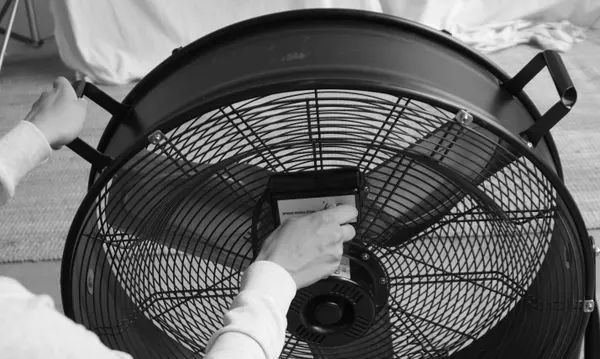
Set the equipment. Low-grain refrigerant (LGR) dehumidifiers pull water out of the air; air movers blow across wet walls and floors so moisture evaporates. Desiccant dehumidifiers are used for dense materials like concrete and hardwood.
Dry hidden spaces. Baseboards may come off and small holes are drilled behind them so dry air can reach inside the wall. Cabinet toe kicks come off to dry underneath.
Measure every day. Readings are logged daily and equipment is moved as areas dry. These logs also support your insurance claim.
Confirm it's dry. Drying is finished when wet materials read the same as dry materials of the same type, not when the surface feels dry.
Why drying takes longer in Fort Myers homes
- Humid outdoor air. Opening windows in Southwest Florida usually adds moisture instead of removing it, so the house is kept closed and the dehumidifiers do the work.
- Concrete slabs. Most homes sit on a slab, which soaks up water and releases it slowly. Tile and vinyl plank trap it underneath.
- AC alone isn't enough. Your air conditioner lowers humidity somewhat, but it can't pull water out of walls and slab fast enough to stop swelling and mold.
- Hidden water from slow leaks. AC condensate overflows and supply-line drips often run for days before anyone notices, so more material is wet by the time drying starts.
- Block walls. Many Lee County homes have concrete block exterior walls with drywall over furring strips, which can hold moisture behind the drywall.
Why household fans aren't enough
Box fans and a home dehumidifier can help with a small surface spill. After a real leak, they fall short because:
- They can't reach inside walls, under tile or behind cabinets.
- A home dehumidifier removes a fraction of what a commercial LGR unit pulls from the air each day.
- Without readings, nobody knows when the wall or slab is actually dry, and drywall gets closed up wet.
- Moving damp air around in Florida humidity can spread moisture to dry rooms.
How long does drying take?
Most clean-water jobs dry in about 3 to 5 days with commercial equipment. Dense materials take longer.
| What got wet | Typical drying time |
|---|---|
| Drywall and carpet, clean water, caught fast | About 3 to 5 days |
| Tile or vinyl plank on concrete slab | Often longer than 5 days; flooring may need lifting |
| Hardwood or engineered wood | Longer; specialty drying may be needed |
| Anything touched by sewage or floodwater | Contaminated materials are removed first, then the structure is dried |
The drying classes, in plain English
Drying equipment is sized by how much water got into the structure and how hard the materials are to dry:
| Class | What it looks like |
|---|---|
| Class 1 | A small area; little water absorbed |
| Class 2 | A whole room; water wicked up walls and into carpet and pad |
| Class 3 | Water came from above; ceilings, walls, insulation and floors soaked |
| Class 4 | Dense materials like hardwood, concrete or plaster are wet; needs longer, specialty drying |
A higher class means more equipment, more days and a higher cost.
Does drywall have to be cut out?
Not always. Drywall wet with clean water and dried quickly can often stay. It is usually cut out when:
- The water was sewage, floodwater or another Category 3 source.
- The insulation behind it is soaked.
- It sat wet long enough to soften, swell or grow mold.
When it is removed, a "flood cut" is made in a straight line, usually about 2 or 4 feet above the floor, depending on how high the water wicked up.
Drying slabs, floors and cabinets
Slabs dry slowly, and vinyl plank or laminate on top usually has to be lifted so the concrete can breathe. Tile that's still bonded can often stay while the slab dries through the grout. Cabinets are dried by removing the toe kicks and pushing dry air underneath. See water damaged floors and water damaged kitchen cabinets.
Call 239-356-3708 answered 24/7
Can I turn the fans and dehumidifiers off at night?
Please don't. Drying only works while the equipment runs; turning it off lets humidity climb back and adds days to the job. The equipment is loud and uses power: a large commercial dehumidifier can draw around 10 amps, so keep it on its own circuit when possible and never on an extension cord shared with other appliances.
How much does structural drying cost?
Drying equipment for a whole job typically runs $800 to $3,000, plus $300 to $600 for 3 to 5 days of moisture monitoring, according to national 2026 cost guides.
| Item | Typical 2026 range |
|---|---|
| Drying equipment, whole job | $800 to $3,000 |
| Moisture monitoring, 3 to 5 days | $300 to $600 |
| Antimicrobial treatment | $200 to $600 |
| LGR dehumidifier, per day (example market) | $85 to $125 |
| Air mover, per day (example market) | $22 to $35 |
These are national ranges, not a quote; your price is set after an inspection and should be in writing. See the full water damage cost guide.
What drying means for your insurance claim
Most policies expect you to take reasonable steps to stop further damage, and drying is that step. Daily moisture logs, photos and equipment records show the adjuster what was wet and when it was dry. Gradual, long-term leaks are often treated differently from sudden ones. Read how insurance handles water damage in Florida.
Leaks that need careful drying in Fort Myers
AC condensate overflows soak ceilings, insulation and closet walls. See AC leak water damage.
Homes left empty for the season, where a leak runs for weeks. See water damage in vacant homes.
Condo leaks that cross into units below and need drying in two homes at once. See condo water damage.
Slab leaks that soak the concrete from below. See slab leak water damage.
Questions about water mitigation and drying
How do you know the house is dry?
Wet materials are measured against dry materials of the same type in an unaffected part of the house. When they match, drying is finished. Touch and smell are not reliable.
Will I get mold?
Mold can start within 24 to 48 hours in humid conditions, which is why drying starts the same day. If mold has already grown, bring in a qualified Florida mold remediator to remove it.
Why are there holes drilled behind my baseboards?
The small holes let dry air flow into the wall cavity, so the inside of the wall can dry without cutting out the drywall. They are covered when the baseboards go back on.
Do I need professional drying if the leak was small?
If the water stayed on a hard surface and was wiped up right away, probably not. If it reached under flooring, into walls or under cabinets, the hidden moisture usually needs commercial equipment and readings.
Can I stay home during drying?
Usually yes after a clean-water leak. Expect noise and warm air around the equipment. Rooms with sewage or floodwater should stay closed off.
Should I open the windows to help it dry?
Usually not in Fort Myers. Humid outdoor air slows drying. Keep the house closed and the AC running unless the crew tells you otherwise.
Is professional drying available in Cape Coral, Lehigh Acres and Estero?
Yes. Structural drying covers Fort Myers, Cape Coral, Lehigh Acres, North Fort Myers, Fort Myers Beach, Estero and Bonita Springs. Call 239-356-3708 any hour to get started.
Wet walls or floors that won't dry?
The longer moisture stays, the more has to be torn out. Call and tell us what you see.
Call 239-356-3708 answered 24/7