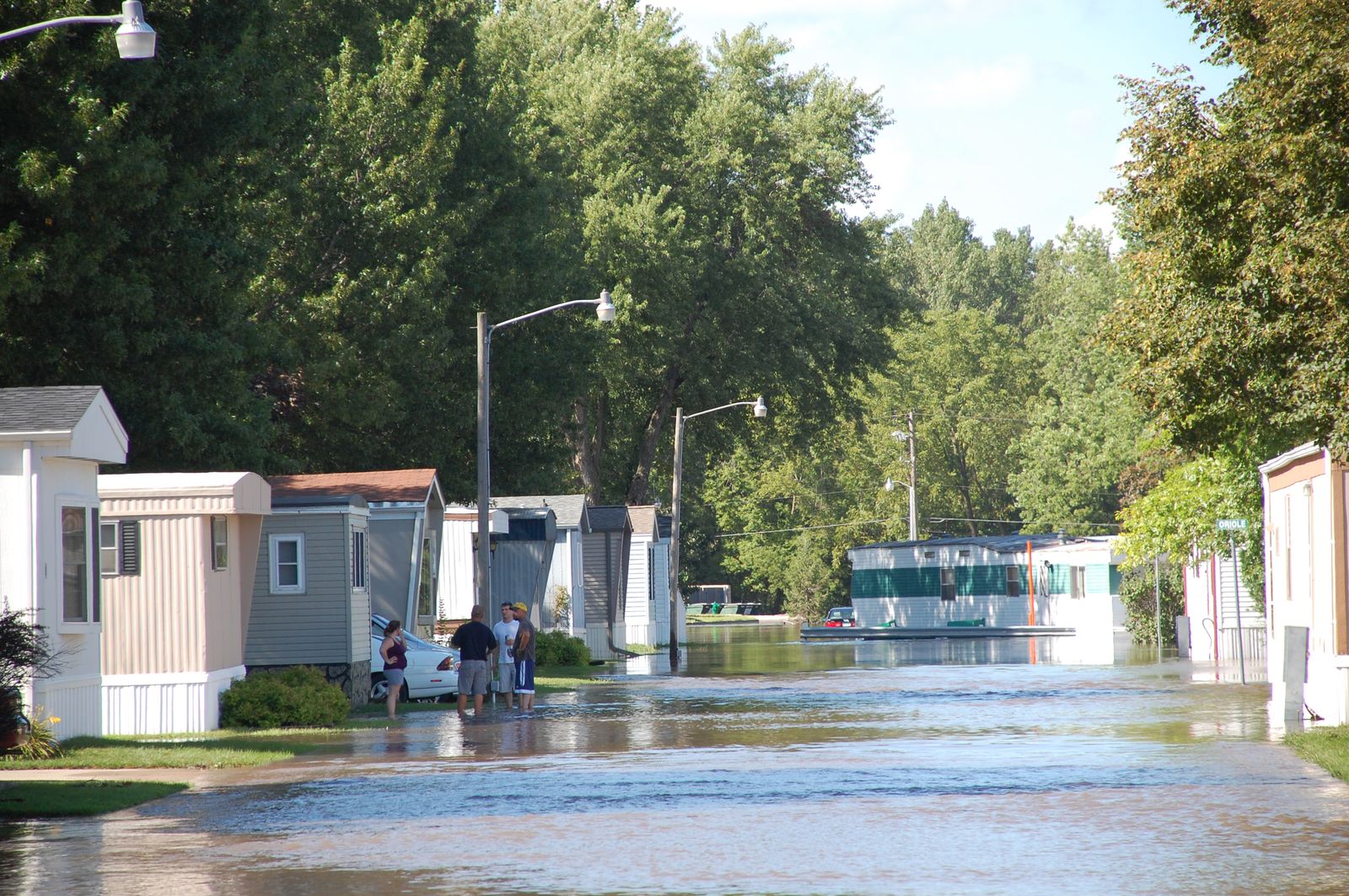
Mobile and Manufactured Home Water Damage Help in Lee County
Shut off the water at the home's main valve and cut power to wet areas before checking underneath.
Water in a manufactured home often collects in the belly wrap, soaking insulation, ducts and the particle board or OSB floor.
A soft floor usually means the decking is wet or damaged; it has to be dried quickly or replaced.
Water leaking in your mobile home right now? Do this first
- Shut off the water. Most manufactured homes have a main valve where the supply line enters under the home, and many also have a valve at the water heater.
- Turn off the water heater at its breaker if it's leaking or the water is off.
- Cut power at the breaker to rooms where water reaches outlets or appliances.
- Stay off soft spots. Wet particle board can give way under weight.
- Look underneath from outside with a flashlight: is the bottom board sagging, torn or dripping?
- Photograph everything, inside and under the home, before cleanup.
All first steps in one list: the first-hour water damage checklist.
Why water damage is different in a manufactured home
A typical slab house in Fort Myers sends water across a concrete floor. A manufactured home sits on a steel frame above the ground, and the layers under your feet hold water instead:
- Floor decking is often particle board or OSB, which swells and loses strength when wet.
- The belly wrap (also called the bottom board) is a fabric or plastic barrier under the floor that holds the insulation in place. It also holds water from a leak above it.
- Insulation inside the belly soaks up water like a sponge and stays wet.
- Ductwork in many manufactured homes runs through the floor or belly, so a leak can flood the ducts.
- Water lines and drains run through the belly, so a leak there may not show inside at all.
Homes built after June 15, 1976 are built to the federal HUD code and are called manufactured homes; older ones are often called mobile homes. Both share these weak points.
Common sources of water damage in mobile homes
| Source | Where the damage shows up |
|---|---|
| Water heater leak | Floor of the water heater closet, often soft or rotted; belly under it |
| Supply line under a sink or toilet | Soft floor around the fixture; water in the belly below |
| Toilet wax ring or flange | Soft floor around the toilet base |
| Leaks in water lines inside the belly | Sagging bottom board, wet insulation, high water bill, no visible leak inside |
| Roof seams, vents and skylights | Ceiling stains and wet walls; see ceiling leak help |
| AC condensate or sweating ducts | Wet floor near vents or the air handler; see AC leak water damage |
| Windows and door frames | Swollen wall panels and floor edges after storms |
| Flood or storm surge | Belly, insulation, ducts and decking all wet; see flood and storm cleanup |
Signs of hidden water damage in a mobile home
- Soft, spongy or bouncy floor near the toilet, tub, sinks or water heater
- A belly wrap that sags, bulges or drips
- Musty smell from floor vents when the AC runs
- Wall panels that are stained, swollen or pulling away at the bottom
- A water bill that jumps with no visible leak
- Mold or dark stains along the floor edges
- Doors that start sticking because the floor has moved
How mobile home water damage is dried and repaired
- Stop the source. A plumber repairs the line, fixture or water heater; a roofer or HVAC technician fixes the roof or AC if that's the cause.
- Remove standing water inside with emergency water removal equipment.
- Map the moisture inside and under the home with meters and a thermal camera.
- Open the belly wrap where it's holding water, drain it and remove soaked insulation.
- Dry the floor system from above and below with dehumidifiers and air movers, logging readings daily. See structural drying.
- Replace damaged decking. Particle board that swelled or softened usually can't be saved and is cut out and replaced.
- Close it up. New insulation goes in, the bottom board is patched or replaced and sealed, and flooring goes back down.
- Wet ducts in the belly are checked and cleaned or replaced, because they can spread odor and moisture through the home.
Can a soft mobile home floor be dried instead of replaced?
Sometimes. If clean water was caught within a day or two and the decking is still firm, it can often be dried in place. Particle board that has swelled, crumbled or turned soft has lost its strength and needs to be replaced. Walking on it can make it worse.
How much does mobile home water damage cost?
Mobile home jobs are priced like other water damage for extraction and drying, plus the cost of opening the belly and replacing decking. These are national 2026 ranges for the drying side.
| Work | Typical 2026 range |
|---|---|
| Emergency water extraction | $500 to $2,000 |
| Category 1 extraction and drying | $3 to $4 per sq ft |
| Category 2 extraction and drying | $4 to $6.50 per sq ft |
| Category 3 (sewage or floodwater) | $7 to $7.50+ per sq ft |
| Drying equipment, whole job | $800 to $3,000 |
Subfloor replacement, insulation and bottom board repair are priced by the area opened. These are national ranges, not a quote; your price is set after an inspection and should be in writing. See the full water damage cost guide.
Insurance for manufactured homes
Manufactured homes are usually insured under policies written for them. Coverage rules are similar to homeowners policies:
- Sudden leaks such as a burst supply line or a failed water heater are often covered for the resulting damage. See burst pipe cleanup.
- Slow leaks that rotted the floor over months are often excluded as gradual damage or wear and tear.
- Flood needs a separate flood policy.
- Mold coverage is often capped.
Photograph the floor and the belly before anything is removed, keep the plumber's invoice, and report the claim promptly. Read how insurance handles water damage in Florida.
Mobile home communities in North Fort Myers, Fort Myers and Pine Island
Lee County has many manufactured-home communities, especially in North Fort Myers, parts of Fort Myers, Pine Island and around Bonita Springs. If you live in a community with park rules, let the office know when contractors will be working under the home, and check whether skirting removal needs approval.
Local guide: water damage restoration in North Fort Myers.
How to protect a manufactured home from water damage
- Check the floor around the toilet, tub and water heater every few months for softness.
- Look under the home after heavy rain and after storms for a sagging bottom board.
- Replace old supply lines and the water heater pan when they age.
- Keep the roof seams and vents sealed, especially before hurricane season.
- Shut off the water at the main valve when you leave for the season.
Questions about mobile home water damage
Why is my mobile home floor soft?
Usually because water has soaked the particle board or OSB decking, most often around a toilet, tub, sink or water heater. Once it softens, it has lost strength and typically needs replacing.
How do I know if there's water in my mobile home's belly?
Look under the home for a sagging, bulging or dripping bottom board, and check for a musty smell from floor vents. A rising water bill with no visible leak is another sign.
Can water in the belly wrap cause mold?
Yes. Wet insulation trapped in the belly stays damp in Florida humidity, which can lead to mold and odors. Opening the belly and drying it quickly prevents that.
Does insurance cover a rotted mobile home floor?
It depends. A sudden leak is often covered; rot from a slow leak over months is often excluded. Your policy wording and the cause decide it.
How long does it take to fix water damage in a mobile home?
Drying usually takes several days once the belly is opened. Replacing decking, insulation and the bottom board adds time after that.
Is there mobile home water damage help in North Fort Myers and Pine Island?
Yes. Call 239-356-3708, answered 24/7, for manufactured and mobile homes in North Fort Myers, Fort Myers, Pine Island, Lehigh Acres, Cape Coral and Bonita Springs.
Can a water-damaged mobile home floor be repaired?
Particle board subfloor that has swelled or gone soft usually has to be cut out and replaced. Solid plywood caught early can often be dried in place.
Is standing water under my mobile home a problem?
Yes. Water under the home raises humidity in the belly and floor system and invites mold and rot. Find the source, whether a leaking line, AC drain or poor drainage, and get the belly area dried.
Water under or inside your mobile home right now?
Shut off the water, stay off soft spots and call. The sooner the belly and floor are dried, the less decking has to be replaced.
Call 239-356-3708 answered 24/7